1310 vs. 1350 U-Joints: The Ultimate Driveline Upgrade Guide
When building a reliable off-road rig, muscle car, or tow vehicle, your driveshaft’s universal joints (U-joints) are the critical links keeping power moving to your wheels. If you are ordering a custom driveline, you will inevitably face a choice: Should you stay with a 1310 series or upgrade to a heavy-duty 1350 series?
Understanding how these sizes differ in strength, dimension, and real-world application is the key to preventing a catastrophic failure on the trail or track.
What Are U-Joints and Why Do They Matter?
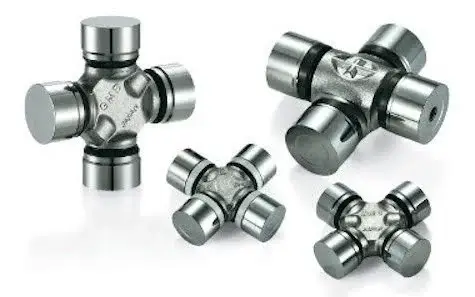
Universal joints (U-joints) are flexible, cross-shaped connectors sitting at each end of a driveshaft. They allow the shaft to rotate smoothly and continuously transfer power even as your vehicle’s suspension moves up and down, altering the driveline angle.
Upgrading your U-joint series doesn’t just mean changing the cross itself—it means your yokes, companion flanges, and the driveshaft tubing are all upgraded to larger, significantly thicker components.
What is the Difference Between 1310 and 1350 Series Joints?
The core difference between a 1310 and a 1350 series joint comes down to physical dimensions and ultimate yield strength:
- 1310 Series (“The Half-Ton Standard”): This is the classic factory standard found in most stock Jeeps, half-ton pickup trucks, and classic muscle cars. It uses a cap diameter of 1.062 inches and a body width of 3.219 inches.
- 1350 Series (“The One-Ton Muscle”): Found stock in heavy-duty 1-ton commercial trucks, the 1350 series is built for brutal punishment. It features a larger 1.188-inch cap diameter and a 3.625-inch body width.
1350 U-Joint: Pros and Cons
- Pros: Offers roughly 37.5% more torque handling capacity than a 1310 joint. It delivers unmatched durability, handles extreme shock loads, and provides complete peace of mind.
- Cons: Higher initial cost. Upgrading requires changing out your transfer case and differential yokes. Additionally, because of the larger body size, a standard 1350 joint can have slightly less angular flexibility (operating angle clearance) before binding compared to a 1310.
When Should You Consider Upgrading to 1350 U-Joints?
A 1350 upgrade isn’t always mandatory, but it becomes necessary when your vehicle hits certain performance thresholds:
1. Tire Sizes of 35 Inches or Larger
Large, heavy off-road tires create massive rotational mass. When crawling over rocks or spinning through mud, the leverage exerted by a 35-inch, 37-inch, or 40-inch tire places immense strain on the driveline that can easily snap a stock 1310 joint.
2. High Horsepower and High Torque
If you have swapped in a V8 engine, added a supercharger, or built a high-performance track engine, the severe torque output will rapidly twist or break weaker factory joints.
3. Low-Gear Ratios (Heavy Load)
A common point of confusion is gear ratios. Numerically lower gear ratios (such as 3.21, 3.55, or 3.73) mean your driveshaft spins slower but carries a much higher torque load per rotation to move the vehicle. Conversely, numerically higher ratios (like 4.88, 5.13, or 5.38) multiply torque at the axle, meaning the driveshaft spins faster but with less structural effort. If you are running low numerical highway gears with large tires, your driveshaft is working overtime.
4. Heavy Overland Builds and Towing
Weight kills drivetrain parts. If your rig is loaded down with steel bumpers, winches, rooftop tents, and overland gear—or if you frequently tow heavy trailers—the constant load requires 1350-level strength.
5. Aggressive Driving Styles
If your driving style dictates a “when in doubt, send it” mentality, structural insurance is mandatory. Shock loading—like bouncing on a ledge and landing with the throttle wide open—is the number one cause of broken U-joints.
Front vs. Rear Driveshaft Priorities
Because your vehicle operates in 2WD on the street most of the time, your rear driveshaft is the primary driver and shoulders the bulk of the work.
- The Rear Shaft: Should almost always be upgraded first. If budget allows, a 1350 rear shaft is highly recommended for any modified vehicle.
- The Front Shaft: Can often remain a 1310 or a hybrid joint longer because it only splits the load when 4WD is fully engaged.
Advanced Driveline Factors to Consider
1. The Myth of the Driveline “Fuse” (Trail Repairs vs. Reality)
Many off-roaders deliberately choose a 1310 series joint because they want a cheap, $25 “fuse” that breaks before an expensive transfer case or differential gear set does. While this sounds good in theory, trail reality is very different.
When a 1310 joint fails under heavy throttle, it rarely breaks cleanly. The cross usually grenades, instantly splaying the driveshaft ears or twisting the yoke. Once those component ears are warped, you cannot simply press a new U-joint in on the trail—the entire driveshaft is ruined. Upgrading to a 1350 prevents the failure altogether rather than gambling on a messy trail fix.
2. Generational Axle Upgrades (Why Vehicle Year Matters)
Axle names can be deceiving. For example, a modern factory Dana 44 found in a newer Jeep JK or JL platform is a completely different animal than an old Dana 44 from a Jeep TJ. Modern vehicle platforms feature significantly thicker pinion shafts, stronger differential gears, and larger transfer cases built to withstand massive stress. Because your stock surrounding components are already so robust, they can easily handle the strength of a 1350 upgrade without passing a breaking point down the line.
3. Short Wheelbase Angle Restrictions (2-Door vs. 4-Door)
Your vehicle’s wheelbase length heavily impacts which series can physically clear your suspension lift. Short wheelbase rigs—such as 2-door Jeeps or short-bed classic trucks—experience much steeper driveshaft operating angles when lifted. Because a 1350 U-joint has a physically larger body, it has less internal clearance and will bind at a shallower operating angle than a 1310. If you have a short-wheelbase vehicle with a massive lift, a high-clearance 1310 or a highly specialized high-angle custom shaft may be required to clear the angles without binding.
4. Note for Upgrading Vehicles with Stock Shafts
If you are planning to buy a spare U-joint to keep in your rig for a factory driveshaft, be aware that many modern stock 4x4s do not use standard 1310 or 1350 cross-joints from the factory. Instead, modern platforms frequently use enclosed Rzeppa-style CV joints on the transfer case side. Upgrading to a durable, traditional 1310 or 1350 double-cardan setup requires replacing the entire factory driveshaft and changing out the stock companion flanges for custom output yokes.
Build with Room to Grow at JE Reel Driveline
Don’t wait to get stranded on a trail with a snapped driveshaft. At JE Reel Driveline, we carry an extensive inventory of high-strength 1310 series parts, heavy-duty 1350 series setups, and custom yokes to handle everything from mild daily drivers to extreme King of the Hammers race rigs.
Unsure which setup aligns with your tire size, gear ratio, and application? Follow our step-by-step blueprint on how to measure a driveshaft to gather your specs, then consult with one of our driveline pros to engineer your perfect setup.
Call Our Tech Line: 909-629-9002
Email Us: contact@jereel.com
What is a Double Cardan Joint? Single vs. Double Cardan Driveshafts Explained
If you are upgrading or replacing the driveshaft in your Jeep, truck, or SUV, navigating driveline terminology can feel overwhelming. One of the most critical decisions you will face is choosing between a conventional single-cardan and a high-performance double-cardan driveshaft.
Understanding how these joints operate—and how they handle operating angles—is the secret to eliminating driveline vibrations and protecting your vehicle’s drivetrain components.
What is a Single-Cardan Driveshaft?
A single-cardan driveshaft (often called a conventional, standard, or non-CV driveshaft) features a single universal joint (U-joint) at each end of the shaft. While highly effective for factory applications at flat, stock ride heights, a single universal joint fluctuates in speed as it rotates through an angle.
When your vehicle’s operating angle becomes too steep—such as after installing a suspension lift kit—these speed fluctuations turn into severe, annoying driveline vibrations that can accelerate wear on your transmission, transfer case, and differential seals.
What is a Double-Cardan Driveshaft? (And How It Works)
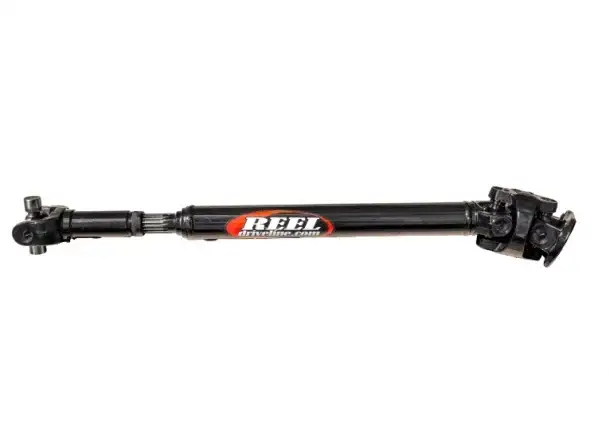
A double-cardan joint (commonly referred to as a Constant Velocity or CV joint) consists of two universal joints mounted back-to-back, connected by a specialized centering yoke or ball socket mechanism. Typically installed at the upper end of the driveshaft near the transfer case or transmission output, the two U-joints work in unison.
The magic of the double-cardan design lies in physics: as the shaft rotates, the non-uniform speed fluctuation caused by the first U-joint is precisely canceled out by the second U-joint. This phase cancellation delivers a perfectly smooth, constant velocity of power to the output end, even when handling severe, steep operating angles.
Busting a Common Myth: A frequent misconception is that a double-cardan joint is designed to flex twice as far as a single joint before binding. This is fundamentally incorrect. While some heavy-duty CV assemblies offer slightly higher maximum operating angles, the primary purpose of a double-cardan joint is smooth, vibration-free operation at elevated angles, not extreme articulation clearance.
When Should You Upgrade to a Double-Cardan Driveshaft?
You should consider stepping up to a double-cardan setup in two primary scenarios:
- Replacing a Factory CV Shaft: If your vehicle came equipped with a double-cardan driveshaft from the factory, you should always replace it with a double-cardan setup to maintain proper ride quality.
- Post-Lift Kit Vibrations: If you have lifted your 4×4 or truck and are experiencing a noticeable drivetrain shudder or vibration, your single-cardan layout is likely binding or operating outside of its acceptable angular limits. Upgrading to a double-cardan assembly is the definitive solution to restore a smooth ride.
Technical Requirements for Upgrading
Switching your vehicle from a single-cardan to a double-cardan setup is a highly effective upgrade, but it is rarely a “drop-in” modification. To achieve a perfectly vibration-free setup, keep the following requirements in mind:
- Slip Yoke Eliminator (SYE): If your vehicle utilizes a standard factory slip yoke sticking out of the transfer case (common on Jeeps like the Wrangler TJ or Cherokee XJ), you will need to install a Slip Yoke Eliminator kit to convert the output to a fixed flange or yoke.
- Pinion Angle Correction: For a single-cardan shaft, your transfer case output and differential pinion must be perfectly parallel. However, for a double-cardan shaft, your differential pinion must point directly at the transfer case output shaft (typically $1^\circ$ to $2^\circ$ below the centerline to account for axle wrap under acceleration). You will need adjustable control arms or pinion shims to set this geometry properly.
- Get Accurate Measurements: Because these modifications alter your spacing, never guess on lengths. Always take exact measurements using our step-by-step guide on how to measure a driveshaft before ordering your custom build.
Eliminate Your Drivetrain Shudder with JE Reel Driveline
At JE Reel, we specialize in high-clearance, heavy-duty double-cardan driveshafts engineered to handle the severe angles of lifted Jeeps, off-road trucks, and high-horsepower custom projects. Whether you need a rugged 1310 setup or a bulletproof 1350 Series CV driveline, our 40+ years of racing heritage ensures your vehicle handles every trail and highway smoothly.
Have questions about fixing your pinion angle or choosing the right CV driveshaft for your application? Reach out to our driveline pros today!
Call Us: 909-629-9002
Email Us: contact@jereel.com
Why Custom Driveshafts are Essential for High-Performance Off-Road Vehicles
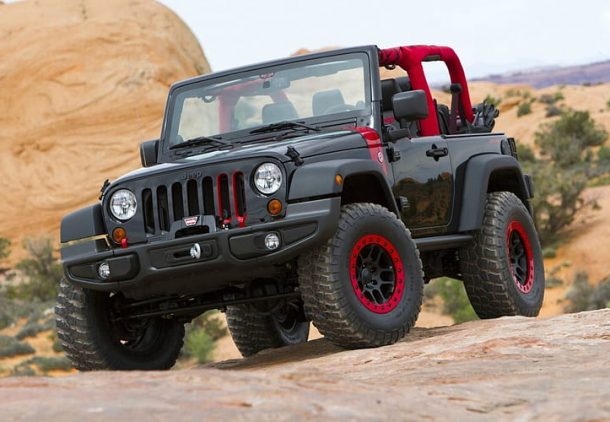
When it comes to high performance offroading, be it racing or rock crawling, every component of a vehicle plays a vital role in determining performance and capability. Because of this the significance of investing in a custom driveshaft cannot be overstated. Unlike conventional driveshafts, off-road driveshafts are designed specifically to handle the unique demands of rugged terrain, ensuring optimal vehicle performance. Custom driveshafts are not just an upgrade; they are an essential element that can make or break an off-road adventure. In this article, we will explore the reasons why custom driveshafts are indispensable for those who push their vehicles to the limit in challenging terrains.
Understanding Driveshaft Functionality for Off-Road Vehicles
Off-road vehicles are specifically engineered to navigate challenging terrains, and this design philosophy extends to every component, particularly the driveshaft. Unlike standard vehicles, off-roaders must overcome numerous obstacles, requiring a driveshaft that is just as unique to match their enhanced capabilities. The transmission in off-road vehicles is optimized to effectively transfer torque from the engine to the differential(s) and wheels, which is essential for maintaining momentum during steep climbs and rocky paths. Upgrading to a custom driveshaft can significantly improve power delivery, thereby reducing the risk of drivetrain failure during demanding maneuvers. Additionally, off-road vehicles benefit from increased ground clearance, with aftermarket driveshafts engineered to provide the necessary lift to navigate over obstacles seamlessly. This added clearance keeps the undercarriage safe from damage and enhances the vehicle’s ability to traverse rough terrain.
Challenges Faced by Off-Road Vehicles
Off-road vehicles face unique challenges that standard vehicles rarely encounter. When traversing rugged terrains, these vehicles must deal with obstacles such as rocks, mud, and steep inclines. Each of these situations places extraordinary demands on the driveshaft. The increased torque and forces experienced in rock crawling or off-road trail conditions can lead to immense abuse on the driveshaft components. Conventional, stock driveshafts are typically designed for standard driving conditions and may not withstand the rigors of aggressive off-roading. This vulnerability can result in vibrations, performance issues, or even catastrophic failure, leaving enthusiasts stranded in the wilderness.

Advantages of Custom Driveshafts
When it comes to overcoming the challenges of off-roading, custom driveshafts offer several distinct advantages:
Tailored Design for Specific Needs
Custom driveshafts are engineered to meet the specific requirements of a particular vehicle and its intended use. This customization allows for precise material choices, such as steel for durability or carbon fiber for lightweight performance. High-performance off-road vehicles often require driveshafts that account for increased torque and unexpected stresses, which may not be adequately addressed by off-the-shelf options.Moreover, custom dimensions can be crafted to accommodate unique vehicle setups, including modifications to lift kits, suspension systems, and wheel sizes. This ensures that the driveshaft fits perfectly and operates efficiently within the confines of the vehicle’s system.
Enhanced Strength and Durability
One of the primary benefits of custom driveshafts is their enhanced strength and durability. Made from high-quality materials and engineered to withstand the harshest conditions, custom driveshafts are built to resist bending, breaking, and excessive wear. During off-road excursions, the forces acting on the driveshaft can be immense. A robust custom driveshaft can absorb these forces more effectively than a stock counterpart, significantly lowering the risk of failure. This advantage translates directly into greater peace of mind for drivers who push their vehicles to the limit.
Improved Performance
Custom driveshafts not only enhance the strength of a vehicle’s drivetrain, but they also contribute to overall performance improvements. With precise engineering and superior materials, custom driveshafts facilitate smoother power transfer from the engine to the wheels, reducing vibrations throughout the vehicle. This smooth operation enhances handling and responsiveness, two critical factors for off-road driving.Additionally, custom driveshafts can be tuned to optimize performance characteristics specific to the type of driving. Whether tackling steep grades, navigating through obstacles, or speeding through rough trails, custom driveshafts ensure that the power is delivered efficiently and effectively.

Key Features of Custom Driveshafts for Off-Roading
When opting for custom driveshafts, several key features are crucial to enhancing off-road capability:
Upgraded U-Joints
Upgraded U-joints are integral to the performance of off-road driveshafts. Traditional U-joints can wear out quickly under extreme conditions, leading to failures and costly repairs. Custom driveshafts can incorporate heavy-duty U-joints designed to endure the specific stresses of off-roading, ensuring longevity and reliability.
Slip Yokes and Their Benefits
Slip yokes are another critical feature of custom driveshafts. They provide the necessary length adjustment to accommodate suspension travel, allowing the driveshaft to expand and contract smoothly as the vehicle navigates uneven terrain. A custom slip yoke can significantly improve performance, ensuring the driveshaft remains operational even during extreme articulation.
Balancing and Alignment
Proper balancing and alignment are essential for minimizing vibrations and maximizing performance. Custom driveshafts undergo meticulous balancing procedures during production that stock parts may not receive. This precision reduces the risk of vibrations that can lead to driver fatigue and mechanical failures.
In conclusion, the critical role of custom driveshafts cannot be overstated for high-performance off-road vehicles. They are essential for ensuring optimal performance, enhancing durability, and offering peace of mind when facing demanding terrains. Off-road enthusiasts should consider investing in custom driveshaft solutions tailored to their specific needs, as these components can be the difference between a smooth, thrilling ride and an unexpected breakdown in the wild. Whether you’re an avid off-roader or a competitive racer, enhancing your vehicle’s capabilities with custom driveshafts is a decision that pays dividends on every adventure.
For those interested in upgrading their driveshafts or enhancing vehicle performance, numerous resources are available. One highly recommended option is JE Reel Driveline. With over four decades of experience, Jim Reel and our team at JE Reel Driveline are renowned for their exceptional craftsmanship in high-quality driveshafts and performance parts. We provide detailed guides and consultations to assist with specific needs, ensuring that you choose the right solutions for your high-performance off-road vehicle.
Invest in your off-road adventure today and experience the difference that JE Reel Driveline can make in optimizing your vehicle’s capabilities on any terrain!
Driveshaft Alignment: How an Incorrect Angle Affects Your Vehicle’s Performance
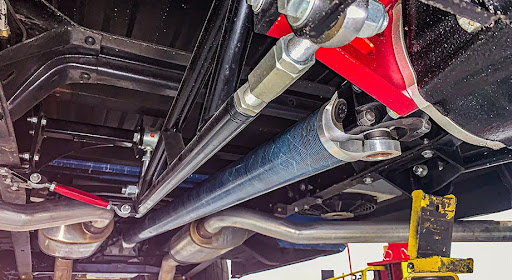
The driveshaft plays a critical role in transferring power from your vehicle’s engine to the wheels, ensuring smooth operation and optimal performance. However, if the driveshaft angle is incorrect, it can lead to a host of issues that negatively impact your vehicle’s performance. From increased vibrations and excessive wear on components to potential drivetrain damage, driveline misalignment is not something to overlook. In this article, we’ll explore how driveshaft angle affects your vehicle and why proper driveshaft alignment is essential for maintaining a reliable and efficient rid
Understanding the Driveshaft
Driveshaft: The driveshaft is a crucial component in vehicles that transmits power from the engine to the wheels. Its proper functioning is essential for smooth operation and performance. By understanding its role, you can make informed decisions regarding maintenance and upgrades, ensuring efficiency and extending the lifespan of your vehicle.
READ: The Basics on Driveshafts and How Does a Driveshaft Work
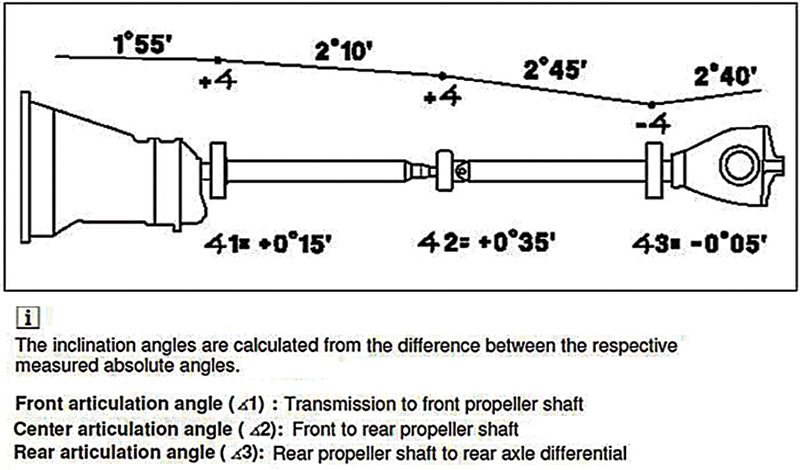
Driveshaft Angle: Driveshaft angle refers to the angle at which the driveshaft is positioned relative to the transmission and differential. It is crucial for the efficient transfer of power and smooth operation of the vehicle. Proper angles ensure that the components rotate smoothly without undue stress or vibration. Before checking your angles, make sure to read our guide on how to measure a driveshaft to ensure your custom length setup is correct. The angle is typically measured between the driveshaft and the transmission output shaft or differential input shaft. Driveline alignment is the process of setting these angles correctly.
Why Proper Driveshaft Alignment is Crucial
Proper driveshaft alignment is crucial for maintaining the overall performance, safety, and longevity of your vehicle. Here’s why it matters:
- Smooth Operation: Correct alignment ensures that the driveshaft operates smoothly, minimizing vibrations and noise. This leads to a more comfortable and quieter driving experience.
- Extended Component Life: Proper alignment reduces stress on the U-joints, bearings, and other drivetrain components. This helps prevent premature wear and extends the lifespan of these parts, reducing the need for costly repairs or replacements.
- Improved Vehicle Handling: Accurate driveshaft alignment contributes to stable and predictable handling. This enhances vehicle control and safety, especially during high-speed driving or maneuvering.
- Enhanced Fuel Efficiency: When the driveshaft is correctly aligned, power is transmitted more efficiently from the engine to the wheels. This reduces the amount of energy required and can lead to better fuel economy.
- Prevention of Drivetrain Damage: Misalignment can cause excessive strain on the drivetrain, potentially leading to damage or failure of critical components. Proper alignment helps prevent such issues and maintains the integrity of the drivetrain.
- Reduced Maintenance Costs: Regularly maintaining proper driveshaft alignment can help avoid more significant problems down the road. This proactive approach can lead to lower overall maintenance costs and fewer unexpected repairs.
Proper alignment of the driveshaft is vital to prevent excessive wear and tear, vibrations, and potential damage. Aligning the driveshaft correctly optimizes power transfer and enhances overall vehicle stability. Regular checks and alignments will save you from costly repairs, ensuring a safer and more enjoyable driving experience. Maintenance is key!
Symptoms of a Misaligned Drive Shaft
An incorrect driveshaft angle can lead to several adverse effects on your vehicle. Recognizing the symptoms of a misaligned drive shaft quickly is key to preventing major damage.
- Vibration and Noise: When the driveshaft is misaligned, it can cause excessive vibrations and noise. These disturbances not only create an uncomfortable driving experience but may also indicate underlying issues that require immediate attention.
- Premature Wear and Tear: Incorrect driveshaft angles can lead to accelerated wear on the components, increasing the likelihood of repairs. Regular alignment checks are essential to mitigate this risk and ensure the longevity of your vehicle.
- Reduced Fuel Efficiency: Misalignment can cause the drivetrain to work harder, leading to decreased fuel efficiency. The engine may need to expend more energy to compensate for the inefficiencies caused by the incorrect angle.
- Drivetrain Damage: In severe cases, an incorrect driveshaft angle can cause significant damage to the drivetrain. This includes potential failure of the U-joints, driveshaft, or even the differential, leading to major repair costs.
- Unstable Handling: A misaligned driveshaft can affect the vehicle’s handling, making it less stable and more difficult to control, especially at higher speeds.
What are the Symptoms of Incorrect Pinion Angle?
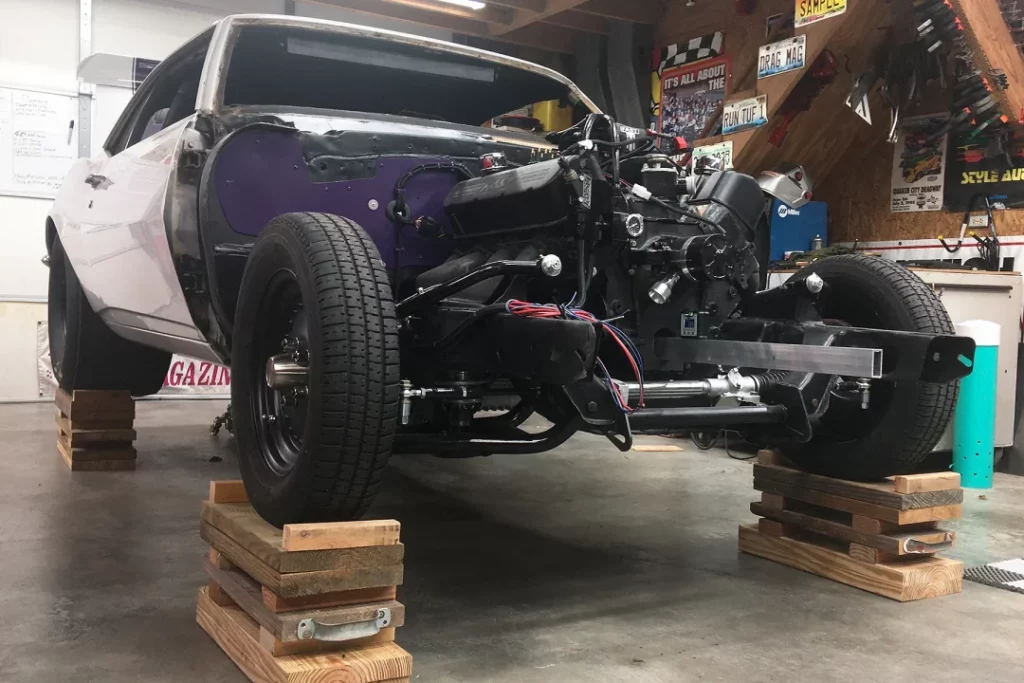
The pinion angle is a critical measurement that forms part of the overall driveline alignment. When this angle is incorrect, it often manifests through specific issues.
- Accelerated U-Joint Failure: An incorrect pinion angle forces the U-joints to work at a much steeper angle than intended, dramatically reducing their lifespan and leading to early failure.
- Vibrations Under Load (Pinion Angle Specific): While general misalignment causes vibration, an incorrect pinion angle often causes a distinct vibration or shudder during hard acceleration (when the axle “wraps up”).
- Clunking Sounds: Excessive difference in the operating angles caused by poor pinion angle can lead to a “clunk” when shifting from drive to reverse or vice versa, due to excessive driveline slack and shock.
Common Causes of Driveshaft Alignment Issues
Driveline alignment can be compromised by various factors:
- Lifting or Lowering the Vehicle: Altering your vehicle’s height can lead to driveshaft misalignment. When you lift or lower the suspension, the angles of the driveshaft components may change, causing potential misalignments.
- Suspension Modifications: Any modifications to the suspension system can also affect the alignment of the driveshaft, leading to performance issues.
- Vehicle Accidents: A collision can bend components and throw them out of alignment, necessitating inspection and repair.
- Improper Installation: If the driveshaft components are not installed correctly, it can lead to serious misalignment and performance concerns.
- Excessive Load or Towing: Hauling heavy loads or towing improperly can cause stress on the driveshaft, leading to misalignment over time.
How JE Reel Can Help with Correcting Your Driveshaft Alignment
When it comes to correcting driveshaft alignment issues, you need a trusted expert with a proven track record. JE Reel Driveline has been a leader in the aftermarket automotive industry for over 40 years, specializing in driveshaft solutions that enhance vehicle performance and longevity. Our experienced technicians have a combined expertise totaling more than 40 years and use state-of-the-art equipment to diagnose and correct driveshaft alignment problems, ensuring your vehicle operates smoothly and efficiently Whether you’re dealing with misalignment from a recent modification or seeking to optimize your vehicle’s performance, JE Reel Driveline is here to help you get back on the road with confidence.
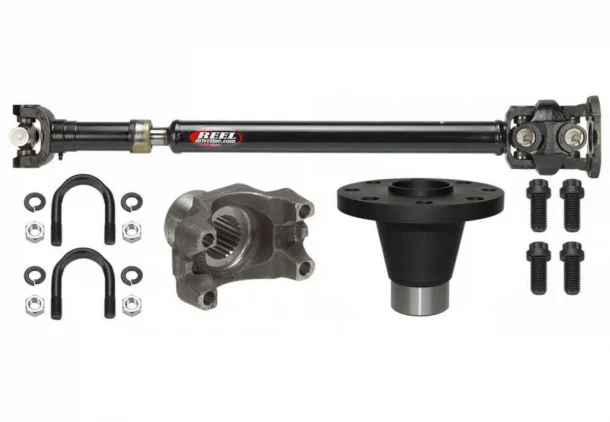
Elevating Performance: A Comparison of JE Reel Driveline Driveshafts to Original Equipment Options
Driveshafts are integral components of a vehicle’s drivetrain system, responsible for transferring power from the engine to the wheels. While original equipment (OE) driveshafts come standard in most vehicles, aftermarket solutions offer performance-driven enhancements tailored to meet the demands of enthusiasts and high-performance applications. JE Reel Driveline, specializes in premium driveshafts that is designed to elevate performance and reliability. In this comprehensive article, we’ll compare our driveshafts to OE options, exploring their differences in construction, performance, and suitability for various applications.
Construction and Materials
OE driveshafts are typically manufactured using conventional materials such as steel or cast iron, chosen for their cost-effectiveness and ease of production. While these materials provide adequate strength and durability for everyday driving, they may lack the performance characteristics required for high-performance applications. In contrast, driveshafts are constructed from stronger steel materials, higher quality universal joints, better fixtures and for lighter options higher grade materials such as aerospace-grade aluminum or carbon fiber reinforced polymer (CFRP), offering superior strength-to-weight ratios and enhanced performance capabilities.
Performance and Reliability
OE driveshafts are designed to meet the requirements of mass-produced vehicles and standard driving conditions, offering satisfactory performance and reliability for everyday commuting and highway driving. However, for enthusiasts seeking to push the limits of their vehicles on the track or off-road, OE driveshafts may fall short in terms of performance and durability. Driveshafts are engineered with performance-driven enhancements such as reinforced welds, heavy-duty yokes, and precision-balanced components, ensuring reliable power transfer, reduced driveline vibration, and improved drivetrain responsiveness. Whether it’s drag racing, rock crawling, or high-speed street driving, Our driveshafts deliver uncompromising performance and reliability under the most demanding conditions, allowing enthusiasts to push their vehicles to the limit with confidence.
Customization Options
OE driveshafts are mass-produced components designed to fit a wide range of vehicle models and configurations, offering limited customization options for enthusiasts seeking to optimize drivetrain performance. In contrast, driveshafts offer a range of customization options, including length, diameter, material, and configuration, allowing enthusiasts to tailor their driveshaft solutions to their specific vehicle requirements and performance goals. Whether it’s adjusting the driveshaft length for a lifted truck or selecting a carbon fiber driveshaft for a high-performance sports car, provides the flexibility and expertise to create bespoke driveshaft solutions that optimize vehicle performance and reliability.
Cost and Value
While OE drive shafts may offer cost-effective solutions for vehicle manufacturers and everyday drivers, they may lack the performance and durability required for enthusiasts and high-performance applications. Our driveshafts represent a premium aftermarket option with higher upfront costs, but they offer superior performance, reliability, and value over the long term. By investing in driveshafts, enthusiasts can enjoy the benefits of enhanced performance, reduced maintenance, and improved drivetrain longevity, making them a worthwhile investment for enthusiasts seeking to elevate their driving experience.
In conclusion, while OE driveshafts provide satisfactory performance for everyday driving, JE Reel Driveline driveshafts offer superior performance, reliability, and customization options for enthusiasts seeking to push the limits of their vehicles. With advanced materials, precision engineering, and performance-driven enhancements, driveshafts deliver unmatched performance and value, allowing enthusiasts to unleash the full potential of their vehicles on the track, off-road, or on the street. Whether it’s reducing rotational mass, improving throttle response, or customizing drivetrain configurations, driveshafts provide enthusiasts with the tools they need to elevate their driving experience to new heights.
High Performance Racing options Drag and Drift Cars: Our Aluminum and Carbon Fiber series driveshaft
In the world of high-performance racing, every component plays a crucial role in achieving maximum speed, agility, and control. Among these components, the driveshaft stands as a critical link between the engine and the wheels, transmitting power with precision and efficiency. For drag and drift cars pushing the limits of speed and performance, JE Reel Driveline offers a range of advanced driveshaft solutions designed to deliver unparalleled performance and reliability. In this comprehensive article, we’ll explore JE Reel Driveline’s Aluminum and Carbon Fiber Series Driveshafts, examining our unique features, benefits, and suitability for drag racing and drifting applications.
The Essence of High Performance Racing
Drag racing and drifting represent two distinct yet exhilarating forms of high-performance racing, each demanding unique characteristics from drivetrain components like the driveshaft. In drag racing, rapid acceleration and straight-line speed are paramount, requiring driveshafts capable of handling high torque loads and delivering instant power transfer to the rear wheels. Conversely, drifting demands precision control and quick transitions between acceleration and deceleration, necessitating driveshafts with exceptional responsiveness and agility to maintain traction and control in high-speed slides and drifts.
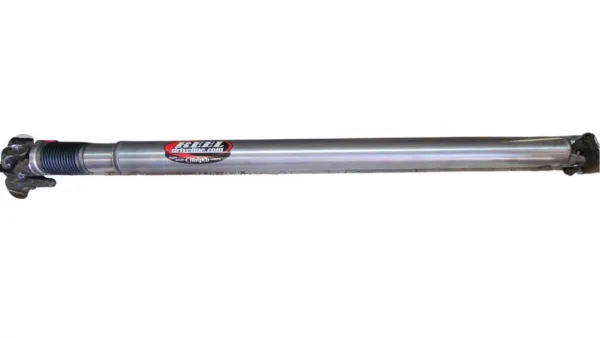
JE Reel Driveline’s Aluminum Series Driveshafts
JE Reel Driveline’s Aluminum Series Driveshafts are engineered to meet the demands of high-performance racing, offering a lightweight yet durable solution for drag and drift cars. Constructed from aerospace-grade aluminum alloys, these driveshafts provide significant weight savings over traditional steel counterparts, reducing rotational mass and improving acceleration, throttle response, and overall vehicle performance. With precision-balanced components and advanced techniques, JE Reel Driveline’s Aluminum Series Driveshafts deliver uncompromising strength, reliability, and performance on the track, allowing racers to push the limits of speed and agility with confidence.
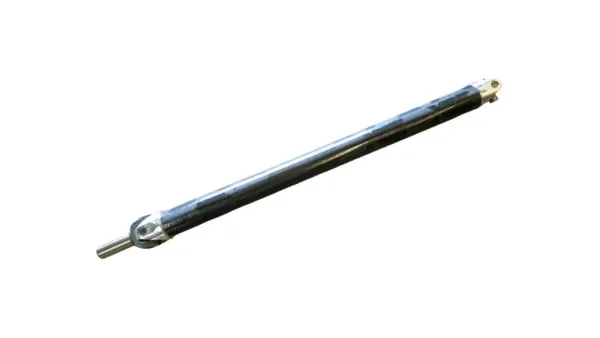
Carbon Fiber Series Driveshafts
For the ultimate in lightweight performance and strength, JE Reel Driveline offers Carbon Fiber Series Driveshafts designed specifically for drag racing and drifting applications. Constructed from high-strength carbon fiber reinforced polymer (CFRP) materials, these driveshafts offer exceptional strength-to-weight ratios, providing maximum power transfer and acceleration while minimizing rotational inertia. The inherent stiffness and rigidity of carbon fiber materials ensure precise power delivery and responsive throttle control, allowing racers to achieve optimal traction and stability during high-speed launches and aggressive cornering maneuvers. With advanced engineering and meticulous craftsmanship, JE Reel Driveline’s Carbon Fiber Series Driveshafts represent the pinnacle of performance and reliability for drag and drift cars at the highest levels of competition.
Benefits of JE Reel Driveline’s Driveshaft Solutions
Regardless of the racing discipline or vehicle application, JE Reel Driveline’s Aluminum and Carbon Fiber Series Driveshafts offer several key benefits for high-performance racing enthusiasts:
Lightweight Construction
Both aluminum and carbon fiber driveshafts provide significant weight savings over traditional steel counterparts, improving acceleration, handling, and fuel efficiency.
High Strength and Durability
Aerospace-grade materials and advanced processes ensure that JE Reel Driveline’s driveshafts withstand the rigors of high-speed racing, delivering reliable performance and longevity.
Precision Engineering
Each driveshaft is meticulously engineered and balanced to exacting standards, ensuring smooth operation, minimal vibration, and consistent performance under the most demanding conditions.
Customization Options
JE Reel Driveline offers a range of customization options, including length, diameter, and configuration, allowing racers to tailor their driveshaft solutions to specific vehicle requirements and performance goals. See our build custom driveshaft’s page.
In the world of high-performance racing, every advantage counts, and JE Reel Driveline’s Aluminum and Carbon Fiber Series Driveshafts offer racers a competitive edge on the track. With lightweight construction, high strength, and precision engineering, these driveshaft solutions deliver uncompromising performance, reliability, and agility for drag racing and drifting applications. Whether chasing quarter-mile times or mastering hairpin turns, racers can trust JE Reel Driveline to provide the driveshaft solutions they need to unleash the full potential of their vehicles and dominate the competition.
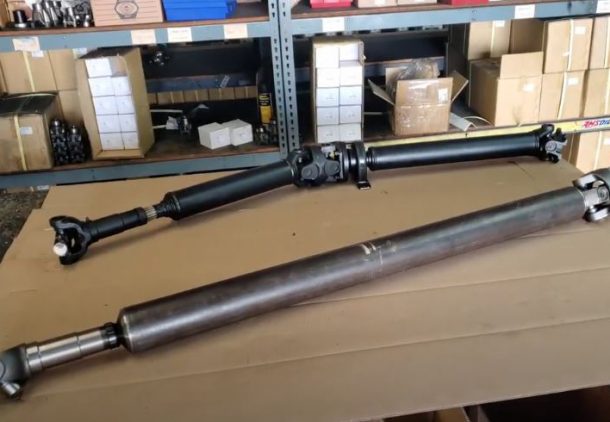
Understanding the Symptoms of a Bad Drive Shaft
The drive shaft plays a role in your vehicle by transferring power from the engine to the wheels allowing them to rotate at speeds. A functioning drive shaft is crucial for efficient operation of your vehicle. However if it starts to malfunction it can cause discomfort while driving and even pose safety risks. Recognizing signs of drive shaft issues is important for maintaining performance and safety. This article aims to provide you with insights into symptoms that indicate a drive shaft empowering you to make informed decisions regarding necessary repairs or replacements.
Understanding the Significance of Your Drive Shaft
The drive shaft is a component that connects the engine to the wheels facilitating torque and rotational movement. Its primary function is to ensure movement of your vehicle by distributing power between the front and rear axles. When the drive shaft doesn’t operate smoothly it disrupts this power transmission. Therefore comprehending the importance of this overlooked part can make a difference, between enjoying smooth rides or frequently visiting auto repair shops. This article explores why your drive shaft holds significance in terms of your vehicle’s performance.
READ: The Basics on Driveshafts and How Does a Drive Shaft Work
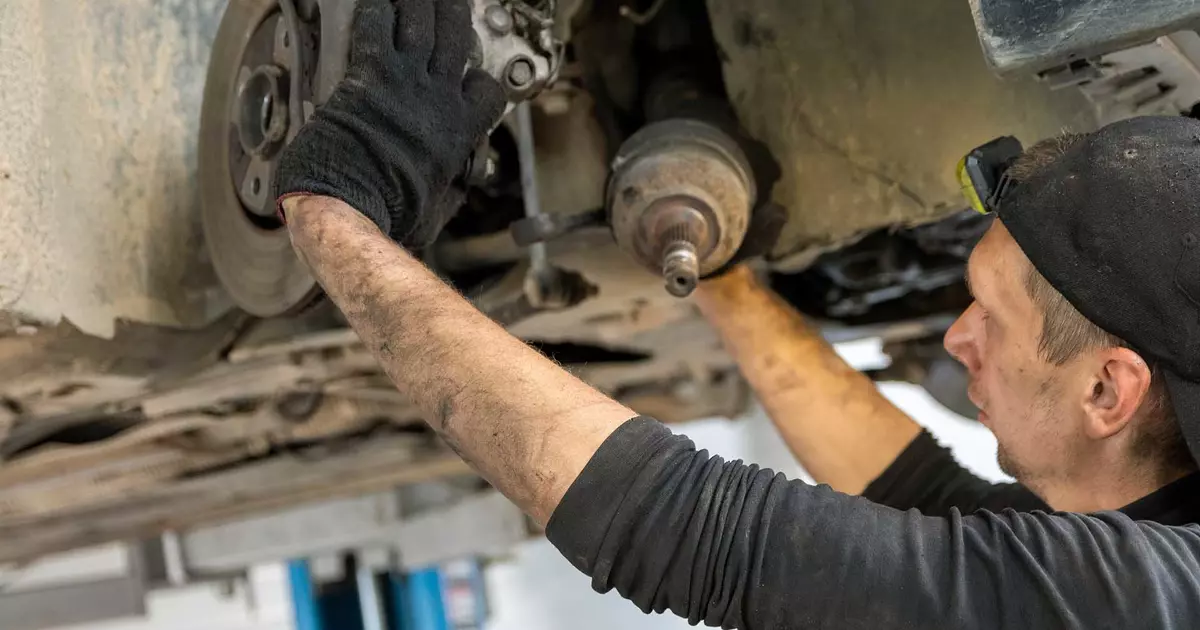
Recognizing Indications of a Bad Drive Shaft
1.Vibrations. If you notice vibrations while driving, especially if they become stronger, as your speed increases it’s often an indication of balance issues related to a failing drive shaft.
2. Unusual Noises. Buzzing, rattling or clunking sounds coming from beneath your vehicle could be a result of worn out or damaged drive shaft components.
3. Difficulty with Turning. A malfunctioning drive shaft can affect your vehicle’s ability to turn properly causing resistance when making turns.
4. Car Jerks During Acceleration. If your car jerks or shudders when you try to accelerate it may be a result of shaft damage.
5. Damage on Drive Shaft. Any visible bends, cracks or twisted parts on the drive shaft are indications that immediate replacement is necessary.
Remember, ignoring these symptoms can lead to problems such as decreased fuel efficiency and even loss of control while driving. It is always advisable to consult with a mechanic if any of these signs occur.
Consequences of Neglecting Drive Shaft Problems
Neglecting issues with the drive shaft can have potentially dangerous consequences. These include;
1. Loss of Power. A faulty drive shaft disrupts the power transfer between the engine and axles resulting in reductions in vehicle performance.
2. Decreased Fuel Efficiency. It takes energy to compensate for a failing drive shaft, which can lead to reduced fuel efficiency and increased expenses over time.
3. Further Damage. Ignoring initial symptoms can worsen drive shaft damage, impacting parts of your vehicle’s drivetrain system such as the transmission or differential.
4. Break Down. If the drive shaft completely fails it can cause breaks that render your vehicle immobile leading to repairs or even the need for a replacement.
5. Risk Safety. The significant consequence is the safety risk posed by losing control of the vehicle if the drive shaft fails while driving at speeds potentially resulting in accidents.
To avoid these risks it is important to have your car checked whenever you notice signs of a drive shaft.
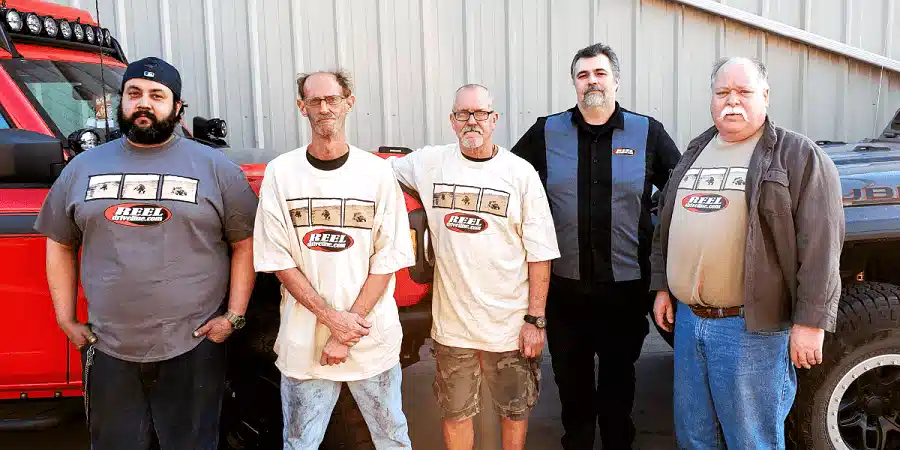


Introducing JE Reel Driveline
JE Reel Driveline has a standing history dating back for over four decades. Widely recognized in the automotive industry for producing reliable and high quality drive shafts. Established as a family owned machine shop in California catering to the automotive sector we later ventured into high performance driveshafts using our expertise in crafting top tier components.
JE Reel Driveline has built its reputation on our commitment to delivering performance, durability and excellent customer service.our products are well known for our durability. Have gained widespread popularity in various vehicle applications from everyday cars, to off-road and racing vehicles.
The JE Reel family believes that every component matters, regardless of its size. We meticulously pay attention to detail. Continually invest time and resources into research and development in order to enhance the capabilities of drivetrain technology.
With our experience and unwavering dedication JE Reel has earned the trust of car enthusiasts around the world. This makes us the go to solution when it comes to high quality drive shaft needs.
Reasons to Choose JE Reel Driveline for Drive Shaft Replacement
Opting for JE Reel Driveline when you need a drive shaft replacement is not only a choice for reliability but also emphasizes the value proposition and quality assurance we offer. Leveraging our wealth of experience and innovative approaches JE Reel drive shafts that withstand wear and tear.
The testimonials from customers serve as evidence of the reliability of our products. Countless stories can be heard from racers to everyday drivers praising how JE Reel drivelines have endured challenging driving conditions while maintaining peak performance.
When comparing JE Reel with brands a stark contrast becomes evident. While others may cut corners, JE Reel never compromises on quality. Our main focus is on delivering high performance components that’re both reliable and efficient rather than just prioritizing cost effectiveness.
What sets JE Reel apart is our customer service. Our experienced team is always available to offer advice based on our knowledge in the automotive industry.
Opting for JE Reel Driveline demonstrates a dedication to quality, durability and reliability. An investment that guarantees driving experiences in the future.