What is a Double Cardan Joint? Single vs. Double Cardan Driveshafts Explained
If you are upgrading or replacing the driveshaft in your Jeep, truck, or SUV, navigating driveline terminology can feel overwhelming. One of the most critical decisions you will face is choosing between a conventional single-cardan and a high-performance double-cardan driveshaft.
Understanding how these joints operate—and how they handle operating angles—is the secret to eliminating driveline vibrations and protecting your vehicle’s drivetrain components.
What is a Single-Cardan Driveshaft?
A single-cardan driveshaft (often called a conventional, standard, or non-CV driveshaft) features a single universal joint (U-joint) at each end of the shaft. While highly effective for factory applications at flat, stock ride heights, a single universal joint fluctuates in speed as it rotates through an angle.
When your vehicle’s operating angle becomes too steep—such as after installing a suspension lift kit—these speed fluctuations turn into severe, annoying driveline vibrations that can accelerate wear on your transmission, transfer case, and differential seals.
What is a Double-Cardan Driveshaft? (And How It Works)
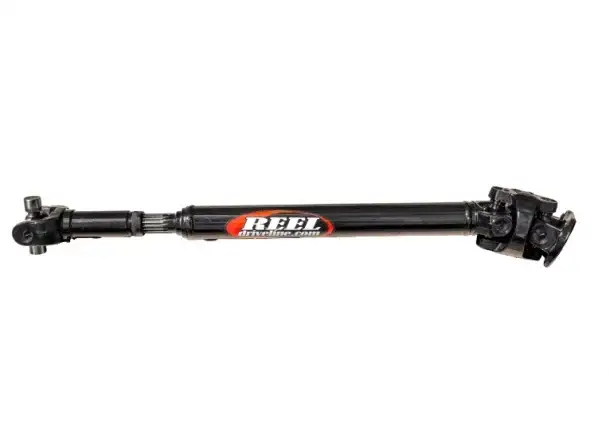
A double-cardan joint (commonly referred to as a Constant Velocity or CV joint) consists of two universal joints mounted back-to-back, connected by a specialized centering yoke or ball socket mechanism. Typically installed at the upper end of the driveshaft near the transfer case or transmission output, the two U-joints work in unison.
The magic of the double-cardan design lies in physics: as the shaft rotates, the non-uniform speed fluctuation caused by the first U-joint is precisely canceled out by the second U-joint. This phase cancellation delivers a perfectly smooth, constant velocity of power to the output end, even when handling severe, steep operating angles.
Busting a Common Myth: A frequent misconception is that a double-cardan joint is designed to flex twice as far as a single joint before binding. This is fundamentally incorrect. While some heavy-duty CV assemblies offer slightly higher maximum operating angles, the primary purpose of a double-cardan joint is smooth, vibration-free operation at elevated angles, not extreme articulation clearance.
When Should You Upgrade to a Double-Cardan Driveshaft?
You should consider stepping up to a double-cardan setup in two primary scenarios:
- Replacing a Factory CV Shaft: If your vehicle came equipped with a double-cardan driveshaft from the factory, you should always replace it with a double-cardan setup to maintain proper ride quality.
- Post-Lift Kit Vibrations: If you have lifted your 4×4 or truck and are experiencing a noticeable drivetrain shudder or vibration, your single-cardan layout is likely binding or operating outside of its acceptable angular limits. Upgrading to a double-cardan assembly is the definitive solution to restore a smooth ride.
Technical Requirements for Upgrading
Switching your vehicle from a single-cardan to a double-cardan setup is a highly effective upgrade, but it is rarely a “drop-in” modification. To achieve a perfectly vibration-free setup, keep the following requirements in mind:
- Slip Yoke Eliminator (SYE): If your vehicle utilizes a standard factory slip yoke sticking out of the transfer case (common on Jeeps like the Wrangler TJ or Cherokee XJ), you will need to install a Slip Yoke Eliminator kit to convert the output to a fixed flange or yoke.
- Pinion Angle Correction: For a single-cardan shaft, your transfer case output and differential pinion must be perfectly parallel. However, for a double-cardan shaft, your differential pinion must point directly at the transfer case output shaft (typically $1^\circ$ to $2^\circ$ below the centerline to account for axle wrap under acceleration). You will need adjustable control arms or pinion shims to set this geometry properly.
- Get Accurate Measurements: Because these modifications alter your spacing, never guess on lengths. Always take exact measurements using our step-by-step guide on how to measure a driveshaft before ordering your custom build.
Eliminate Your Drivetrain Shudder with JE Reel Driveline
At JE Reel, we specialize in high-clearance, heavy-duty double-cardan driveshafts engineered to handle the severe angles of lifted Jeeps, off-road trucks, and high-horsepower custom projects. Whether you need a rugged 1310 setup or a bulletproof 1350 Series CV driveline, our 40+ years of racing heritage ensures your vehicle handles every trail and highway smoothly.
Have questions about fixing your pinion angle or choosing the right CV driveshaft for your application? Reach out to our driveline pros today!
Call Us: 909-629-9002
Email Us: contact@jereel.com
Why Proper Driveshaft Maintenance is Key to Success in Off-Road Racing
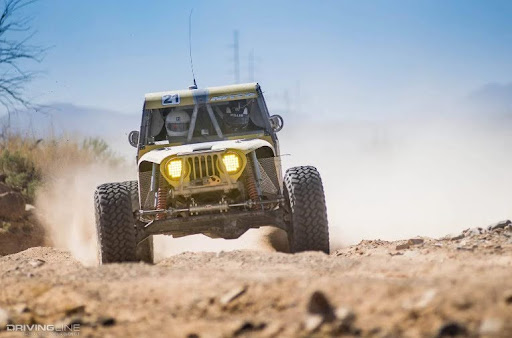
Off-road racing is an adrenaline-pumping sport that demands peak performance from every component of your vehicle. Among these components, the driveshaft plays a crucial role in transferring power from the engine to the wheels while navigating rough terrains. Proper maintenance of the driveshaft is not just a matter of keeping your vehicle running smoothly—it’s essential for ensuring success in off-road racing. Here’s why maintaining your driveshaft is key to achieving and sustaining high performance in off-road racing.
Why Proper Driveshaft Maintenance is Essential for Off-Road Racing

1. Ensuring Optimal Power Transfer
In off-road racing, your vehicle’s ability to transfer power efficiently from the engine to the wheels is paramount. The driveshaft is responsible for this critical task. A well-maintained driveshaft ensures that the power generated by the engine is delivered to the wheels without loss or disruption. This efficiency is crucial for maintaining acceleration, navigating challenging terrain, and achieving competitive lap times. Regular maintenance checks, such as ensuring proper lubrication and alignment, help prevent power transfer issues that could hinder your performance.
2. Enhancing Durability and Reliability
Off-road racing subjects your vehicle to extreme conditions, including high-impact shocks, vibrations, and other severe abuse. These conditions can cause significant wear and tear on the driveshaft. Proper maintenance, including regular inspections and timely repairs or replacements, is essential for enhancing the driveshaft’s durability and reliability. A driveshaft that is in good condition can withstand the harsh demands of off-road racing, reducing the likelihood of mechanical failures that could lead to race day disappointments.
3. Preventing Costly Breakdowns
Neglecting driveshaft maintenance can lead to serious issues, such as misalignment, balance problems, or even total failure. These problems can cause unexpected breakdowns during a race, resulting in lost time and potentially damaging other drivetrain components. By performing routine maintenance and addressing minor issues before they escalate, you can prevent costly breakdowns and ensure your vehicle remains in top condition throughout the racing season.
4. Improving Vehicle Handling and Control
The driveshaft’s performance directly affects your vehicle’s handling and control. An improperly maintained driveshaft can lead to vibrations, instability, and uneven power distribution, which can make handling more difficult, especially on rough or uneven terrain. Regular maintenance helps to ensure that the driveshaft operates smoothly, which enhances overall vehicle stability and control. This improvement in handling allows drivers to navigate challenging courses more effectively and maintain better control over their vehicle.
5. Reducing Vibration and Noise
In off-road racing, minimizing vibrations and noise is crucial for maintaining focus and comfort. A well-maintained driveshaft helps reduce unwanted vibrations and noise, which can be distracting and uncomfortable during a race. Regularly checking for signs of wear and tear, such as worn U-joints or imbalanced shafts, and addressing these issues promptly helps keep vibrations and noise to a minimum, allowing drivers to concentrate on their performance.
6. Extending the Lifespan of the Driveshaft
Proper maintenance is key to extending the lifespan of your driveshaft. Routine inspections, lubrication, and alignment adjustments can help prevent premature wear and extend the operational life of the driveshaft. This longevity not only ensures consistent performance but also helps avoid frequent and costly replacements, making it a cost-effective approach for off-road racers.
7. Enhancing Safety on the Track
A well-maintained driveshaft contributes to overall vehicle safety. A failing driveshaft can cause sudden and catastrophic failures, leading to loss of control or even accidents. Regular maintenance checks help identify and address potential issues before they become serious problems, ensuring that your vehicle remains safe and reliable throughout the race.In off-road racing, the driveshaft is a vital component that requires meticulous care and attention. Proper maintenance ensures optimal power transfer, enhances durability, prevents costly breakdowns, and improves vehicle handling and control. By investing time in regular driveshaft inspections and maintenance, you can ensure your vehicle remains in peak condition and ready to tackle the toughest off-road challenges. For high-quality driveshaft maintenance and performance parts, consider JE Reel Driveline. With over four decades of experience, Jim Reel and his team at JE Reel Driveline are renowned for their exceptional craftsmanship and dedication to off-road racing excellence. Elevate your racing performance with their premium driveshaft solutions, designed to meet the rigorous demands of off-road racing.